
Mobile Home DemolitionSingle & Double-Wide Removal
- Licensed C-11855 · CUC041521
- Family owned since 1978
- We own the transfer station
- Serving 4 Tampa Bay counties
Demolition
Mobile Home Demolition in Clearwater & Tampa Bay
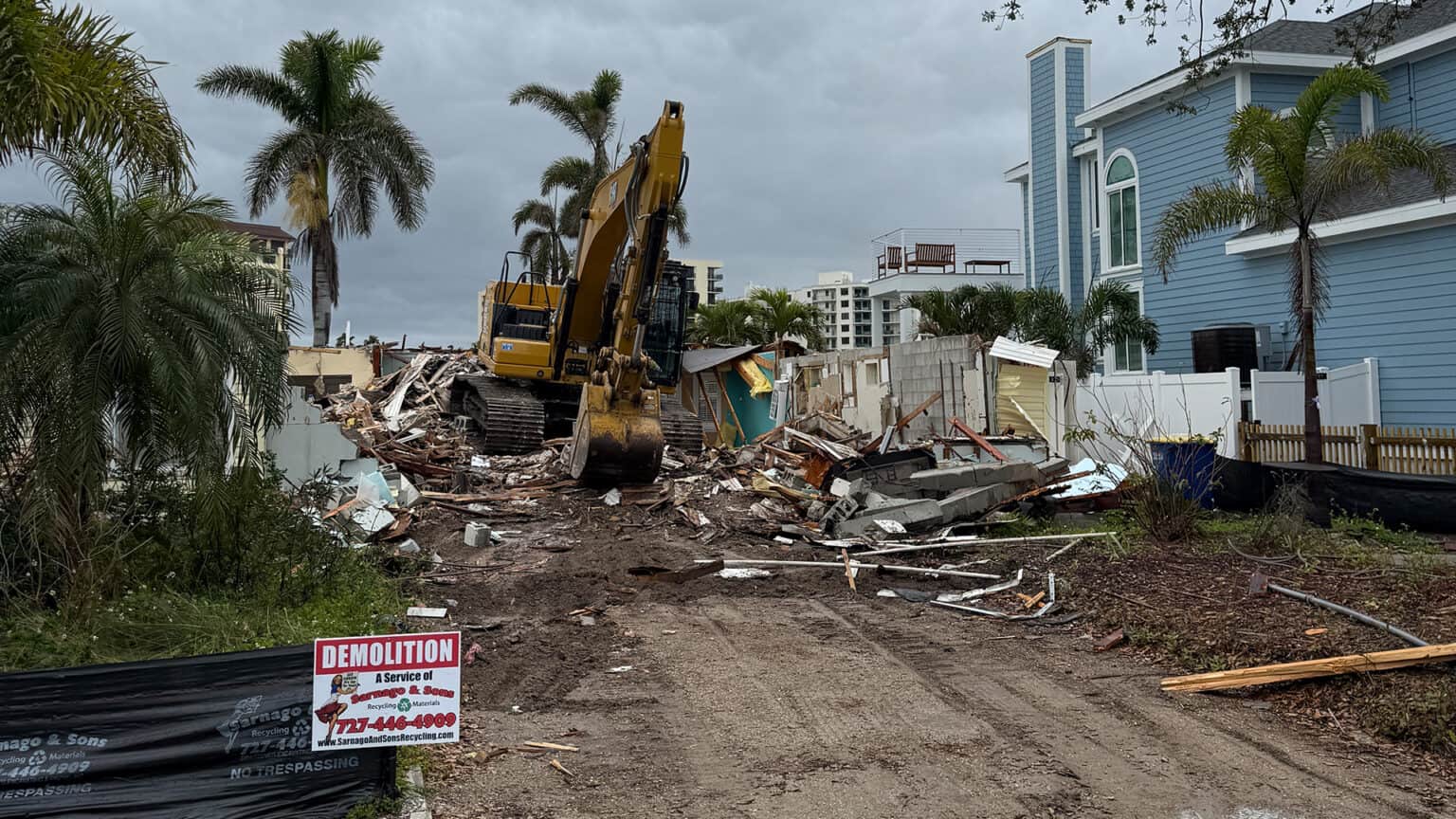
A mobile home is a demolition job and a disposal job at once — the structure comes apart into several different waste streams, and that is what drives the price.
Single-wide or double-wide is the first question, and it roughly doubles the work. After that it is the foundation type — piers, runners or a slab — the site access, and whether the utilities have been properly disconnected. Park lots with tight setbacks and carports on both sides take longer than an open rural parcel.
The structure separates into metal, wood, insulation and appliances. The frame and skin metal are recycled, which offsets a real part of the disposal cost — one reason a demolition contractor running its own transfer station can price this work more keenly than a general hauler paying gate rates on mixed loads.
Older units carry their own paperwork. Mobile homes from the 1970s and earlier can contain asbestos in flooring, ceiling panels and pipe wrap, and every structure needs an asbestos survey before the demolition permit issues, whatever its age. The title also has to be retired with the state — the county wants proof the home existed on paper before it stops existing on the ground, and we walk owners through that.
Piers, tie-downs, skirting, steps and the carport all come out with it, and the pad is graded flat. If you are replacing the unit or building on the lot, we can bring fill and compacted base on the same job.
Most demolition contractors pay a gate rate by the ton at a facility they do not own, add to it, and pass it on. Ours is the gate: the C&D transfer station on Keene Rd is ours, the concrete and block come back to be crushed, and the disposal line on the quote is what it actually costs.
What it costs
What drives a mobile home quote
| Scope of job | What drives the number |
|---|---|
| Single-wide, open access | Length, additions, and how the utilities were run |
| Double-wide | Twice the structure, plus carports and enclosed porches |
| Park lot with tight access | Handwork, smaller equipment, and protecting neighboring units |
| Slab or runner removal | Concrete volume — recycled at our yard rather than tipped |
Every demolition is quoted on site, free. Access, structure and what has to be protected move the number more than square footage does, which is why we walk it rather than price it down the phone.
How it works
What the job looks like
Paperwork and permit
Title retirement sorted, asbestos survey where the age requires it, and the demolition permit filed with the county or city.
Disconnect utilities
Power, water, sewer and gas verified disconnected by the utility before any work starts.
Strip and separate
Appliances pulled, metals separated, and anything salvageable set aside.
Demolish and haul
The structure comes down and goes out in sorted loads — metal one way, C&D the other.
Clear the pad
Piers, tie-downs, skirting and steps removed, and the site graded flat.
What a quote covers
Included
- Demolition permit and title retirement guidance
- Complete structure removal including additions and carports
- Piers, tie-downs, skirting and steps
- Metal recycling credited against the disposal cost
- Pad graded flat and clear
What changes the number
- Pre-1981 units require an asbestos survey before the permit
- Title must be retired with the state before the county closes the permit
- Septic tanks on rural lots need separate abandonment
- Park rules on working hours and haul routes
- Whether the replacement unit needs the pad and utilities kept
Questions
Mobile Home Demolition FAQs
How much does it cost to demolish a mobile home?
A double-wide costs more than a single-wide — roughly twice the material to break down and haul — and built-on additions, carports and screen rooms add from there. Access inside a park and the foundation type move the number too. Our quote includes disposal and grading, and it comes from looking at the actual unit, free.
Do the utilities need to be off first?
Yes, and the utility itself must confirm the disconnect — a flipped breaker does not count. We tell you exactly what to arrange with each provider.
What happens to the title?
It has to be retired with the state so the home comes off the tax roll. The county typically wants that in order before or alongside the demolition permit, and we walk you through it.
Do old mobile homes contain asbestos?
They can — flooring, ceiling panels and pipe wrap in units from the 1970s and earlier. Pre-1981 structures need an asbestos survey before the demolition permit issues, and we coordinate it.
Do you remove the piers and pad too?
Yes. Piers, tie-downs and skirting always come out, and the slab or runners can go too — the concrete gets recycled at our own yard.
How long does mobile home removal take?
One to two days on site for most units once the permit and disconnects are in hand.