
Utility DisconnectsThe Sequence Before Any Demolition
Guide
Utility Disconnects
No permit gets finaled and no machine starts until every service into the structure is verified dead — and the utilities work on their schedule, not yours.
Why this is a hard requirement
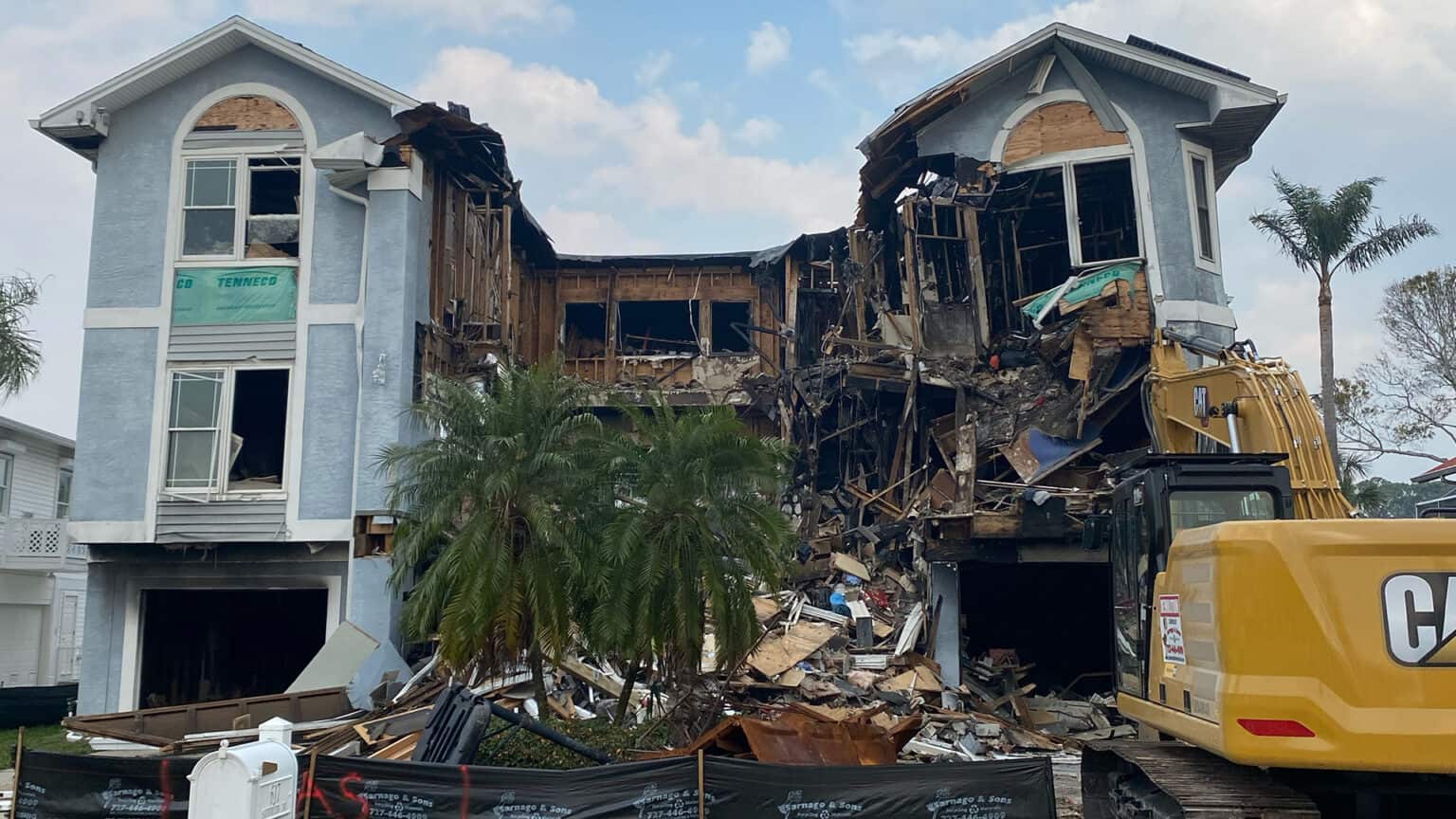
Building departments require confirmed utility disconnects before demolition for the plainest of reasons: an excavator through a live gas line or a hot service drop is how demolition sites hurt people. The permit process asks for confirmation from each utility, and the crews will not start without it regardless of what the paperwork says — a puller test on the power and a check of the gas meter happen on day one either way.
The disconnects are mostly free or cheap. What they cost is lead time, which is why the requests go in the day the demolition is decided, not the week before the machine arrives.
Each utility, who to call, how long
The provider depends on your address — Duke Energy covers most of Pinellas, TECO covers Hillsborough and sells gas across the region, and water and sewer come from your city or county. The pattern is the same everywhere: request the disconnect, the utility schedules a crew, and you get confirmation the service is dead at the property.
| Service | Who handles it | Typical lead time | What actually happens |
|---|---|---|---|
| Electric | Duke Energy or TECO, by address | 1–3 weeks | Meter pulled and the service drop or lateral disconnected |
| Natural gas | TECO Peoples Gas (where present) | 1–3 weeks | Meter removed and the service line cut and capped |
| Water | Your city or county utility | Days–2 weeks | Meter pulled; line capped at the meter or main |
| Sewer | City/county, capped at the job | With the water, usually | Lateral capped — often verified at demolition |
| Septic and well (rural lots) | Licensed contractors, per county rules | 1–2 weeks | Tank pumped and crushed or removed; well capped or abandoned |
| Phone / cable / fiber | Each carrier | Days–2 weeks | Drops removed from the structure |
The order that works
Everything can be requested at once — the sequencing matters only at the end.
- Day 1: close your accounts and request disconnects with every utility serving the structure; tell them it is for demolition, which is a different order than a service stop
- Same week: order the asbestos survey and start the permit — the disconnect confirmations join the application as they arrive
- Before demolition: every confirmation in hand; gas and electric are the two that stop a job cold
- At demolition: we call 811 for utility locates before any ground disturbance — the disconnects kill the services to the building, and the locates map what runs through the ground around it
Where it goes wrong, and our part
The classic failure is the demolition scheduled for Monday with the electric disconnect “requested” but not performed — and the whole job sliding two weeks. The second classic is the forgotten service: an old gas line to a pool heater, a second meter on a converted garage, an irrigation tap off the neighbor’s side. The walk-through is where those get found.
We coordinate the disconnect process on every demolition — we know what each local utility needs to hear and how long each is actually running — but the accounts belong to the owner, so the requests start with a call you make. We hold underground utility license CUC041521, which covers the cut-and-cap and site utility work that demolition regularly turns up.
Questions
Common questions
What utilities must be disconnected before demolition?
Electric, gas, water and sewer at minimum — verified, not just requested — plus septic and well closure on rural lots and removal of phone, cable and fiber drops.
How long do utility disconnects take?
Electric and gas typically take one to three weeks from request in this market; water is usually faster. Request everything the day you decide to demolish.
Who calls the utilities — me or the contractor?
The account holder starts the requests, since the utilities act on the account. We tell you exactly what to ask each one for and track the confirmations into the permit file.
Do disconnects cost money?
Mostly no or little — standard disconnects are generally free or a modest fee. Septic abandonment and well capping are the exceptions, since licensed contractors do that work.
Is calling 811 enough?
No — 811 locates buried lines but disconnects nothing. You need both: disconnects to kill service to the building, and locates before any digging.