
Demolition TimelinesRealiztic Timelines By Job Type
Guide
Demolition Timelines
Every demolition timeline is two clocks: a paperwork clock that runs three to five weeks, and a machine clock that runs days — and only the first one is negotiable by starting early.
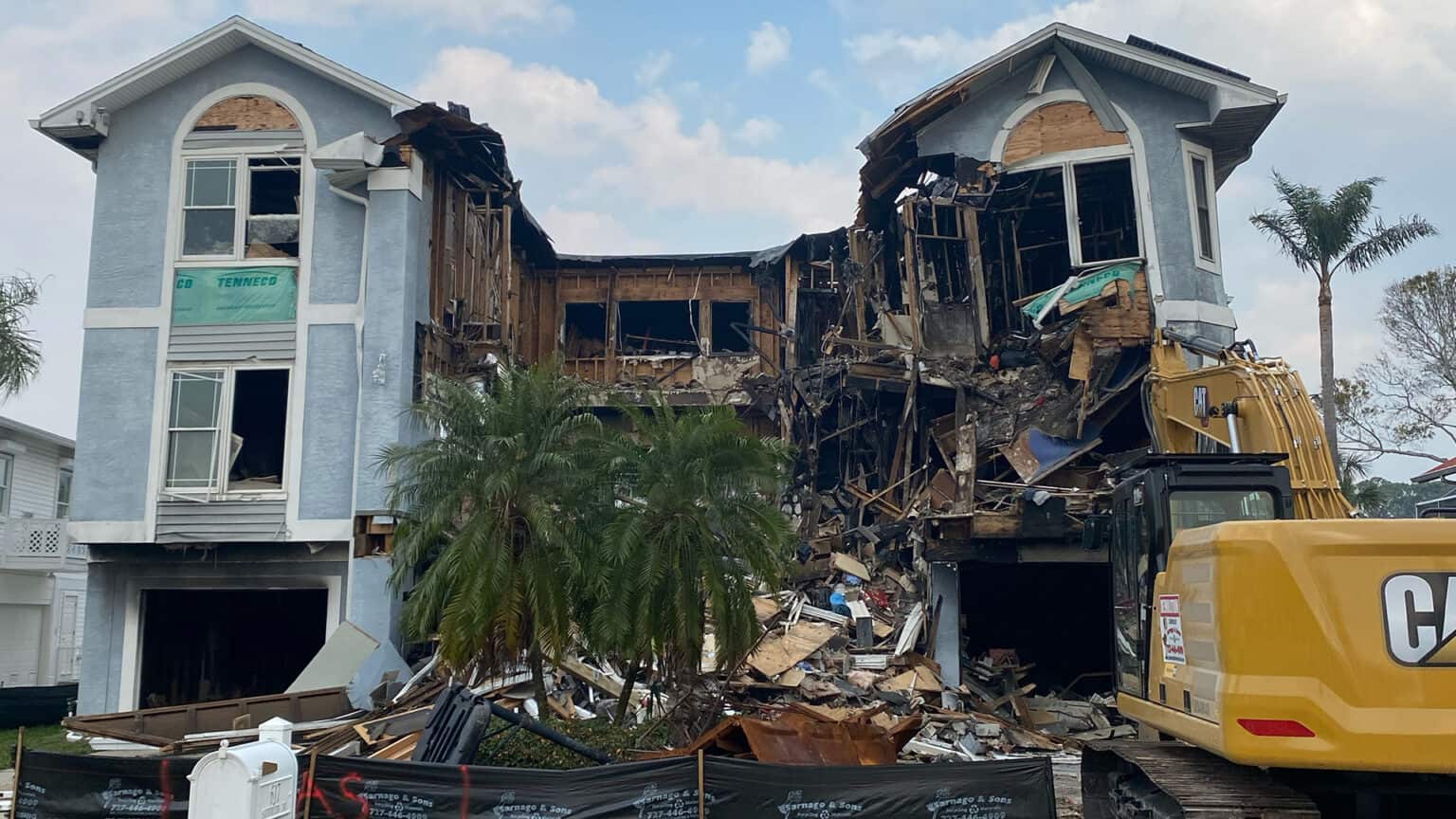
The two clocks
When people ask how long demolition takes they usually mean the machine work, and the machine work is short: most residential structures are down and hauled inside a week. But no machine moves until the asbestos survey is done, the utilities are verified off, the permit is issued, and the NESHAP 10-working-day notice has run. Those overlap, and together they set a floor of roughly three to five weeks before day one on almost any structure demolition in Tampa Bay.
The practical consequence: the day you decide to demolish is the day to order the survey and request the disconnects. That is how a six-week job becomes a four-week job — not by faster excavators.
Machine time by job type
Once the site is cleared to work, these are honest on-site durations for this market, including haul-off and grading.
| Job | On-site time | Lead time before it (typical) |
|---|---|---|
| Detached garage | 1–2 days | 1–3 weeks where permitted |
| Mobile home | 1–2 days | 2–4 weeks with disconnects |
| Swimming pool, partial fill-in | 2–3 days | 1–3 weeks for permit |
| Swimming pool, full removal | 3–5 days | 1–3 weeks for permit |
| House, wood frame | 2–4 days | 3–5 weeks |
| House, concrete block | 3–5 days | 3–5 weeks |
| Commercial building | 1–6+ weeks | 4–8+ weeks with abatement and engineering |
What stretches a timeline
When a job runs past these ranges, it is nearly always one of a short list of causes — and most are visible in advance.
- Abatement — an asbestos survey that finds regulated material inserts days to weeks of licensed removal before demolition
- Utility disconnects — the single most common delay; some utilities take three weeks from request to verified disconnect
- Access and protection — tight lots, party walls, protected trees and overhead lines slow the machine work honestly
- Weather — summer storms rarely stop demolition but do stall backfill and compaction, which need workable ground
- Discoveries — buried tanks, a second septic system, an old slab under the fill; older lots keep secrets
Scheduling around a rebuild
If new construction follows, sequence the demolition so the lot is ready when the builder is — including compacted, documented fill if the pad is in our scope. A gap of weeks between demolition and construction is normal and harmless; demolition finishing late against a construction start date is the expensive version, so build the paperwork clock into the project schedule from the start.
We will give you both clocks in writing with the quote: the earliest realiztic start date given survey, disconnects and permitting, and the on-site duration once we begin.
Questions
Common questions
How long does it take to demolish a house?
Two to five days of machine work — but three to five weeks of survey, utility disconnects, permitting and the NESHAP notice before the machine can start. Plan on five to six weeks door to door.
What is the fastest a demolition can legally start?
The NESHAP notification alone requires 10 working days’ notice before demolition, so roughly two calendar weeks is the absolute floor even when the permit and disconnects move quickly.
Can demolition be expedited after a storm?
Structures that a building official declares unsafe can move under emergency procedures, which shortens the normal clocks. Our hurricane damage guide covers how that works.
Does rain stop demolition?
Ordinary rain, no — it helps dust control. Lightning stops work, and saturated ground delays backfill and compaction, which is the weather delay that actually shows up in summer.
How long does a commercial demolition take?
From about a week on a small freestanding building to multi-month structural jobs. Abatement, engineering and utility coordination set commercial timelines more than machine capacity does.