
Hurricane Damage DemolitionStorm-Damaged Structures, Insurance & The 50% Rule
Guide
Hurricane Damage Demolition
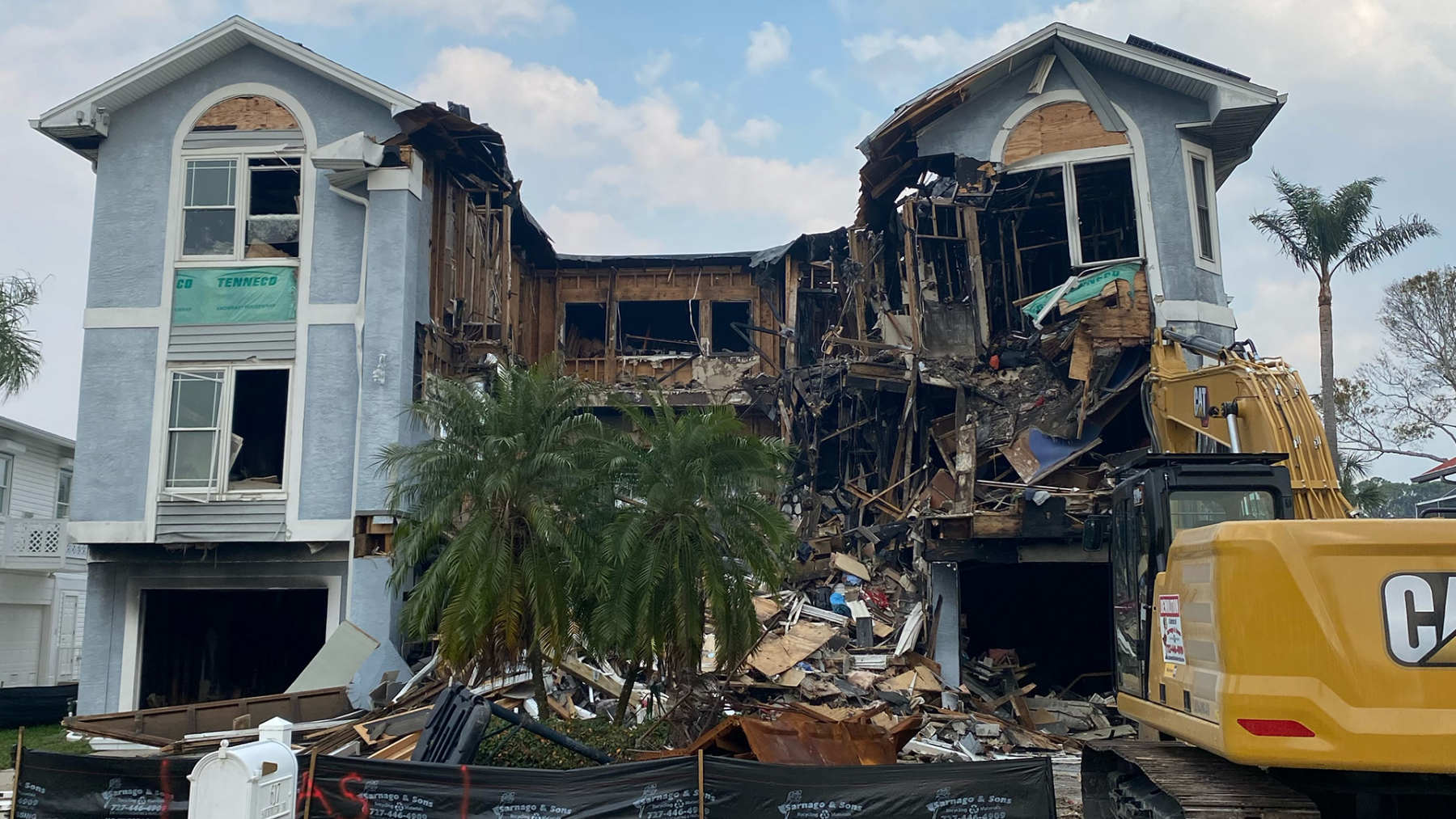
After a storm, whether a damaged house gets repaired or demolished is often not the owner’s choice alone — a determination made by the local floodplain office can make the decision first.
First moves after the damage
Before any demolition conversation: document everything. Photograph and video the structure inside and out before anything is moved or removed, file the insurance claim, and let the adjuster see the damage as the storm left it wherever safety allows. Demolishing before the insurer has documented the loss is the classic self-inflicted wound of storm recovery — it can genuinely compromise the claim.
The exception is immediate hazard: a structure at risk of collapse onto people, a road or a neighboring property. Building officials can declare a structure unsafe and order or authorize emergency demolition, and jurisdictions run expedited procedures after declared storms. Even then, photograph first — thoroughly — and keep every scrap of the paper trail.
Substantial damage and the 50% rule
For homes in FEMA special flood hazard areas — much of coastal Pinellas and the bay shorelines — the local floodplain administration must assess damaged structures after a flood event. If the cost to repair the structure to its pre-storm condition reaches 50% of its pre-damage market value (the building’s value, not the land’s), the structure is declared substantially damaged, and it cannot simply be repaired as it was: it must be brought into full compliance with current floodplain regulations, which for an old slab-on-grade house below today’s required elevation typically means elevating or demolishing and rebuilding at compliant height.
This is why entire streets of modestly damaged-looking houses came down after recent Gulf storms — the determination letters, not the wind, made the decision. If you receive a substantial damage letter, take it seriously and take it early: appeal windows and repair strategies exist, but pretending the letter is a formality is how owners end up a year in with no viable path.
Insurance and demolition, in the right order
Demolition costs after a covered loss are frequently themselves covered — homeowner and commercial policies commonly include debris removal provisions, and demolition of a structure the storm destroyed is part of the loss. The order matters: claim documented, adjuster’s inspection done or explicitly waived, scope agreed in writing, then demolition. We provide itemized quotes and scale-ticket documentation that slot directly into claims files, and we are used to working to an adjuster’s timeline.
Be careful with contractors who appear after storms offering immediate demolition for an assignment of your insurance benefits. Slow down, verify licenses, and keep your claim in your own hands.
What storm demolition looks like in practice
The work itself divides into three tiers, and the paperwork differs for each.
- Emergency make-safe — collapsing elements taken down under a building official’s unsafe-structure authority; fastest path, narrowest scope
- Partial demolition — the destroyed wing, the crushed garage, the failed addition removed so the sound remainder can be repaired; standard permitting, usually expedited after declared events
- Full demolition — the substantial-damage path; normal demolition permitting, including the asbestos survey, which storms do not waive for standing structures
- Flood-soaked contents and finishes are a heavy, high-volume debris stream of their own — our sister operation’s roll-off containers handle the muck-out side while structural decisions are still pending
Rebuilding on the same lot
A storm demolition usually precedes a rebuild at compliant elevation, and the site work carries straight through: we clear to grade, and can supply and compact fill and base from our own yard for the elevated foundation to come. One thing storm sites teach: get the geotechnical picture before the new foundation is designed, because flood-cycled ground and old fill do not always match the plans drawn for them.
Questions
Common questions
Should I demolish my storm-damaged house before the insurance adjuster comes?
No — not unless a building official has declared it an immediate hazard, and even then photograph everything first. Demolition before the loss is documented can compromise the claim.
What does a substantial damage letter mean?
The local floodplain office has determined repair costs reach 50% of your building’s pre-damage market value, so repair-as-it-was is no longer permitted — the structure must be brought to current flood code, elevated, or demolished and rebuilt compliant.
Will insurance pay for demolition?
Often, in whole or part — debris removal and demolition of storm-destroyed structures are commonly covered elements of a claim, and NFIP policies may add ICC funds after a substantial damage declaration. Confirm scope with your adjuster before work starts.
Is the asbestos survey still required after a hurricane?
For standing structures being demolished, yes — storms do not waive the survey or notification requirements, though jurisdictions expedite processing after declared events.
How fast can emergency demolition happen?
Structures declared unsafe by a building official can come down in days under emergency authority. Everything short of that runs the normal, if expedited, permit path.