
Where Debris GoesC&D Recycling And The Transfer Station
Guide
Where Debris Goes
Most demolition debris is not trash — a block house is mostly crushable concrete and recyclable metal — and where it goes determines a real share of what your demolition costs.
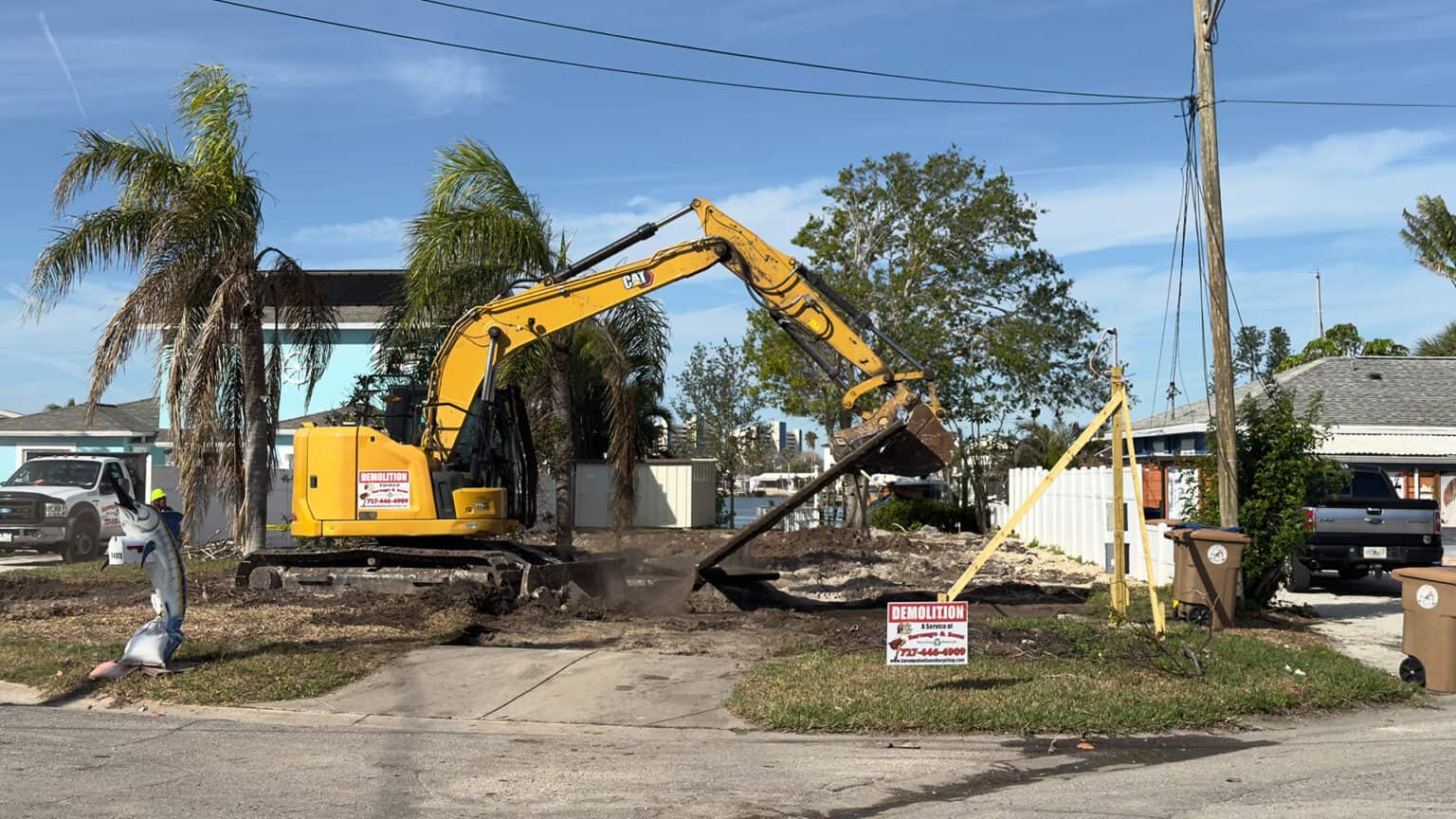
What a demolished building is made of
Break down a typical Florida concrete-block house and the tonnage is dominated by material with a second life. The proportions vary by construction type, but the pattern is consistent: the heavy majority of the weight is concrete and masonry, and concrete and masonry are recyclable at nearly 100%.
| Material stream | Share of weight (typical block house) | Where it goes |
|---|---|---|
| Concrete, block, brick | The large majority | Crushed into road base, paver base, #57 rock |
| Wood framing and trusses | Modest | Ground for mulch/fuel or landfilled, by condition |
| Metals — rebar, ductwork, wire, appliances | Small but valuable | Scrap recycling; offsets disposal cost |
| Roofing, drywall, insulation, finishes | Modest | Mostly landfilled as mixed C&D |
| Asbestos-containing material (if any) | Removed pre-demolition | Licensed abatement and permitted disposal |
How a C&D transfer station works
A construction & demolition transfer station is where debris gets sorted into its streams: trucks cross a scale, tip on the floor, and material is separated — concrete to the crushing pile, metal to scrap, mixed residue consolidated for the landfill. The economics are simple: everything pulled out of the mixed stream is tonnage that does not pay landfill rates, and concrete pulled out becomes a product.
We own ours. Debris from our demolition jobs comes back to our yard at 1741 N Keene Rd in Clearwater, crosses our own scales, and the concrete is crushed on site into road base, paver base and #57 rock that we sell back into the same market the buildings came from. A driveway we demolish this year is, quite literally, the base under someone’s new driveway next year.
Why this shows up in your quote
For most demolition contractors, disposal is a fee paid to someone else and passed through with margin. For us it is an internal transfer to our own facility — no third-party tipping fee, no markup on it, and the concrete has value on the other side. That is not a slogan; it is the specific reason our quotes are strong on concrete-heavy work: block houses, pools, slabs, foundations.
It also changes behavior at the machine. A contractor paying mixed-C&D rates by the ton has no reason to sort carefully. A contractor who owns the crusher sorts at the excavator, because clean concrete is worth more than dirty concrete.
Diversion documentation, LEED and green building
Commercial projects chasing LEED credits, and public jobs with diversion mandates, need the paper: scale tickets showing tonnage in, and documentation of what was diverted from landfill versus disposed. Because our material crosses our own certified scales, we can produce weight tickets and diversion summaries by load for any project that needs them.
For homeowners there is no paperwork requirement — but if you want to know where your house went, the honest answer on our jobs is: mostly into base rock, on this side of town.
Questions
Common questions
Is demolition debris recycled?
The concrete, masonry and metal — the bulk of the weight in Florida block construction — very much is. Concrete gets crushed into base rock and metals go to scrap; roofing, drywall and finishes are the streams that still mostly landfill.
What is crushed concrete used for?
Road base under asphalt and pavers, #57 rock for drainage, and general fill and base applications. It is a direct, spec-able substitute for mined limerock in most base uses.
Does recycling make demolition cheaper?
On concrete-heavy jobs, meaningfully — disposal is a quarter to a third of a typical demolition bill, and recycling turns part of that cost into product instead of tipping fees.
Can you provide LEED diversion documentation?
Yes. Our debris crosses our own certified scales, so we produce weight tickets and diversion summaries per load for LEED and public projects that require them.
What happens to asbestos in the debris?
It never gets that far — regulated asbestos-containing material is removed by a licensed abatement contractor before demolition and goes to a permitted disposal facility, not into the C&D stream.